

In today’s world, stay-at-home dads are becoming more common. They save money on daycare and get to see their kids grow up. But, it can also feel lonely. It’s important for them to have a strong support network.
This network helps them connect with others, share stories, and find help. It’s key for them to thrive in their role.
Key Takeaways
- Stay-at-home fathers can experience feelings of isolation, necessitating the creation of support networks.
- Building a network of other stay-at-home dads provides opportunities for shared experiences and mutual support.
- Connecting with local parent groups, online communities, and family members can help alleviate the challenges of stay-at-home parenting.
- Leveraging technology, such as social media and mobile apps, can facilitate networking and collaboration among stay-at-home fathers.
- Organizing social events and meetups can further strengthen the bonds within the stay-at-home dad community.
The Importance of Support Networks for Stay-at-Home Fathers

Being a stay-at-home dad is a big job, and having a strong support network is key. It helps you deal with your feelings and avoid feeling alone. These groups let you share your experiences, have fun, and get advice from others who get it.
Understanding Emotional Needs
Changing to a stay-at-home parent role can be tough, both in your mind and heart. You might miss your old job or feel lonely without adult talk all day. Support groups give you a place to talk about your feelings and get help from others who understand.
Benefits of Social Interaction
Being part of support groups can lead to lasting friendships and a sense of belonging. It’s good for your mental health, helping you feel less lonely and stressed. Plus, you get tips and advice to help you handle the ups and downs of being a stay-at-home dad.
The National At-Home Dad Network is a great place for stay-at-home dads to connect. It offers support, encouragement, and ways to find or start local groups. By joining these social support systems, you can focus on your mental health and do well as a primary caregiver.
Identifying Support Networks
Being a stay-at-home father is tough, but having a strong support network helps a lot. You can find many ways to meet others and get help. This is good for you and your family.
Local Parent Groups and Organizations
Look into local groups for parents. The National At-Home Dad Network lists many. These groups have meetups and playdates. They help you meet other dads in your area.
Online Communities and Forums
Today, you can find support online. Many forums and communities are there for single fathers. They let you share stories and get advice from home.
Family and Friends as Allies
Your family and friends are great allies. They can offer emotional support and help. Their support means a lot to you as a stay-at-home dad.
Also, don’t miss the HomeDadCon event. It’s a chance for dads to meet and share. It’s organized by the National At-Home Dad Network.
“Connecting with other stay-at-home dads has been a game-changer for me. It’s reassuring to know that I’m not alone in this journey, and the support and advice I’ve received have been invaluable.” – John, a stay-at-home father of two
How to Create a Supportive Environment

Creating a supportive space for stay-at-home dads is key. It means setting clear rules and expectations at home and with friends. It also means talking openly so dads can share their feelings and get help when they need it.
Setting Boundaries and Expectations
Setting boundaries is vital. Talk openly with your partner or family about your role as a stay-at-home dad. Share your needs and what support you want. This way, everyone knows your role and values your work.
Encouraging Open Communication
Open talk is important too. Dads should feel free to share their thoughts and any parenting challenges they face. Make a safe space where dads can talk without fear of being judged or facing masculinity norms. Groups like the National At-Home Dad Network are great for dads to connect, share, and find support.
By setting boundaries, managing expectations, and encouraging open talk, stay-at-home dads can build a strong support network. This helps them thrive in their parenting role.
Engaging with Local Resources
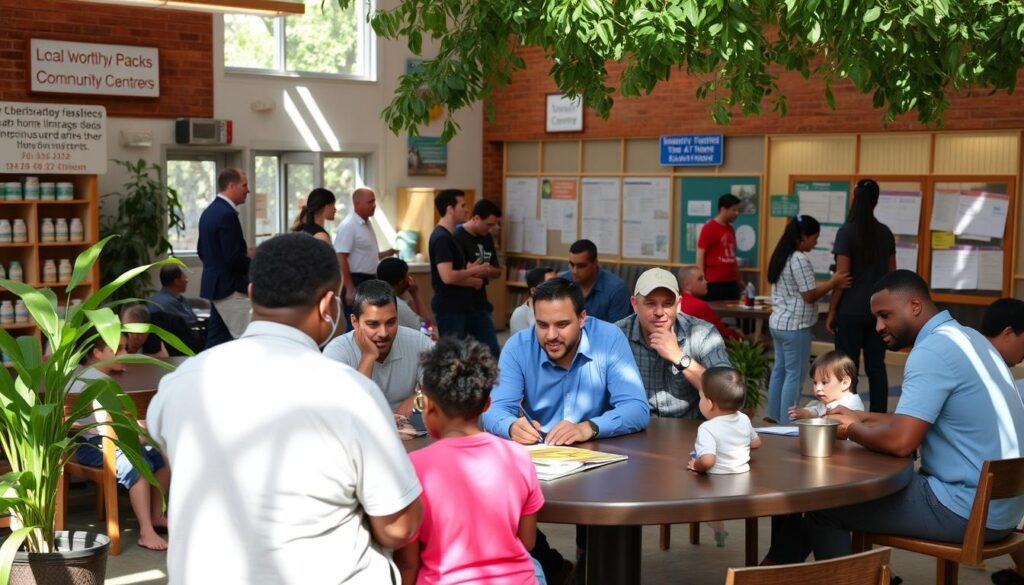
Being a stay-at-home father can be a big change. But, tapping into your local community can make a huge difference. You can find parenting classes and use community centers to help you through the ups and downs of parenting.
Finding Parenting Classes
Parenting classes are full of useful tips and skills. Look for them at your local community college, hospital, or parenting groups. These classes help you learn and meet other parents, including stay-at-home dads.
By sharing and learning together, you grow your parenting skills. You also make new friends.
Utilizing Community Centers
Community centers have lots of programs for families. They offer playgroups, family activities, and workshops. These places are full of resources for parents.
Go to events, help out, or start your own group. This way, you meet other stay-at-home dads. Community centers are great for making connections and finding support.
Using community resources is more than just getting help. It’s about finding people who understand you as a stay-at-home father. By getting involved, you face parenting challenges better. You also build a strong community resources network that supports you on your parenting journey.
Leveraging Technology for Connection

In today’s digital world, technology gives stay-at-home dads many ways to connect. They can use social media and mobile apps to meet others, share stories, and find helpful resources. This helps them on their parenting journey.
Social Media Platforms for Dads
Social media is a great tool for dads to connect. Sites like Facebook and Instagram have groups for dads. They can share their experiences, get advice, and feel supported.
Mobile Apps for Networking
There are also apps made just for parents. Apps like the National At-Home Dad Network’s resources help dads find local groups. They can also access webinars and podcasts for support.
Technology helps dads fight isolation and build strong social support systems. These systems are key for their emotional health. They also offer online communities for sharing and getting help.
“Technology has the power to connect us, but it’s up to us to use it mindfully and intentionally to strengthen our relationships and support networks.”
Organizing Events and Meetups
Building a strong support network as a stay-at-home father can change your life. Organizing events and meetups is a great way to connect. These gatherings let fathers socialize, share experiences, and find friendship.
Playdates and Family Activities
Setting up playdates and family activities is a great idea. These outings help kids and dads bond. Start small, as it may take time for more dads to join.
On average, 2 or 3 dads might show up in the first month. But keep trying, and your group will grow.
Networking Events and Workshops
Also, think about hosting networking sessions and workshops. These events help dads improve their skills, try new hobbies, and balance work and family life. HomeDadCon and Fathers Eve are great examples of dads coming together.
To keep everyone involved, send out weekly emails with event news. Create an email list and message board for discussions. Let members take on leadership roles to strengthen the group’s social interaction.
“A recent study found that a third of new dads didn’t have one single person they could talk to about parenting other than their partners.”
By organizing events, stay-at-home fathers can build a strong support network. These gatherings offer a sense of community and help dads find the resources and advice they need.
Overcoming Challenges in Building Networks
Being a stay-at-home dad comes with its own set of challenges. Societal stigmas and feelings of isolation can be tough. Time management is also a big hurdle for networking. But, with determination and the right strategies, you can build a strong support network.
Dealing with Stigma and Isolation
Traditional gender roles in parenting can lead to societal prejudices against stay-at-home dads. You might face skepticism or judgment. To fight this, find support groups, both online and in your community, where you can meet other dads.
Sharing your experiences with these peers can make you feel less alone. It can also boost your confidence and sense of belonging.
Addressing Time Constraints
Managing childcare, household chores, and personal time can be overwhelming. Yet, it’s vital to make time for networking. Look for flexible options like online forums or virtual support groups.
Try to schedule playdates or meetups during your child’s nap time. With a little planning, you can build a community and find the support you need.
Building a strong support network is good for you and your family. It can improve your parenting, mental health, and set a great example for your kids.
Sharing Experiences and Resources
Being a stay-at-home dad can be tough, but having a supportive network helps a lot. One great way to connect with other dads is through storytelling. Many groups let dads share their stories, challenges, and successes. This way, dads can feel less alone and get new ideas on parenting.
Storytelling as a Connection Tool
Sharing your story can really bring dads together. Shannon Carpenter, a stay-at-home dad for over a decade, has been a big part of the community. He’s shared his experiences on NPR and at conferences, helping other dads.
Resource Sharing: Books, Articles, and Podcasts
Groups also share lots of helpful resources. These include books, articles, and podcasts. For example, the National At-Home Dad Network has a podcast and weekly activities for dads.
Local groups like the Allegheny County Family Centers in Pennsylvania also help. They offer programs on better communication, co-parenting, and stress management. These programs aim to support dads and help them overcome parenting challenges.
| Organization | Location | Focus |
|---|---|---|
| DADS MATTER | Beaver, Fayette, Washington, and Westmoreland counties, Pennsylvania | Assisting fathers, aiming to reach 1,100 by 2025 |
| Fatherhood FIRE | Allegheny County, Pennsylvania | Supporting fathers and father figures aged 18 and older |
| Healthy Start’s Male Initiative Program | Pittsburgh, Pennsylvania | Providing health education, parenting support, and resources for fathers |
By using these resources, stay-at-home dads can get the support they need. They can build strong relationships with their kids and do well in their parenting roles.
The Long-Term Benefits of Support Networks
Building strong support networks is key for stay-at-home fathers. These networks help improve mental health and overall well-being. They offer emotional support and reduce feelings of isolation.
Strong support systems also help fathers deal with parenting challenges. This strengthens family relationships and improves the bond between fathers and their children.
Improved Mental Health and Well-Being
Supportive communities and resources greatly benefit stay-at-home fathers’ mental health. Research shows that fathers with positive social networks feel more confident and less stressed. This leads to a more rewarding parenting experience and a stronger bond with their kids.
Strengthening Family Relationships
Support networks also boost family relationships. Studies show that involved fathers have a positive effect on their children’s emotional and social development. By having a strong support system, stay-at-home fathers can handle parenting better.
This leads to a more harmonious and fulfilling family life.

Leave a Reply