

Running a home business means you must plan for retirement on your own. You don’t have the same retirement plans as regular employees. But, you can use SEP IRA, Solo 401(k), and SIMPLE IRA. These plans offer special benefits and limits to help secure your future.
Key Takeaways
- Self-employed individuals have access to tax-deferred retirement savings options, such as SEP IRA, Solo 401(k), and SIMPLE IRA.
- Contribution limits vary, with the Solo 401(k) allowing up to $69,000 in 2024, plus an extra $7,500 for those 50 and older.
- Retirement planning is key for self-employed home business owners without employer plans.
- Maximizing your contributions can give big tax benefits and help reach your financial goals.
- Talking to a financial advisor can help create a plan tailored to your needs.
Understanding the Importance of Retirement Planning
Retirement planning is key for self-employed folks and home business owners. They don’t have access to employer plans like 401(k)s. So, they must save for retirement on their own. This planning can offer a financial safety net and help reduce taxes in high-earning years.
Why Retirement Planning Matters for Self-Employed Individuals
Self-employed folks face special challenges in planning for retirement. Their income can be unpredictable, making it hard to save regularly. They also have to fund their own retirement accounts, which can be a big financial task. Good planning ensures financial security, even if they sell their business later.
The Unique Challenges Faced by Home Business Owners
- Inconsistent income streams: Your earnings can vary, making steady savings tough.
- Lack of employer-sponsored plans: You must set up and fund your own retirement accounts.
- Balancing business reinvestment and personal savings: Finding the right balance between business growth and retirement savings is tricky.
By tackling these challenges through careful planning, you can secure your financial future. This ensures a comfortable retirement, even as a self-employed home business owner.
https://www.youtube.com/watch?v=al_x30H5zDU&pp=ygUSI3NlbGZlbXBsb3llZHBsYW5z
“Retirement planning is not just about saving for the future – it’s about creating a financial roadmap that aligns with your goals and empowers you to make informed decisions today.”
| Retirement Plan Options | Key Features | Contribution Limits |
|---|---|---|
| SEP IRA | Cost-effective, relatively simple to run, designed for companies with one or more employees | Up to 25% of compensation or $66,000 (2023) |
| SIMPLE IRA | Designed for sole proprietors and businesses with 100 or fewer employees, a cost-efficient option | Up to $15,500 (2023), plus an additional $3,500 for those aged 50 and over |
Types of Retirement Accounts for Self-Employed Workers
As a self-employed person, you have many retirement account options. Each has its own benefits and limits. Knowing the differences can help you choose wisely and save more for retirement.
Traditional vs. Roth IRA: Which is Right for You?
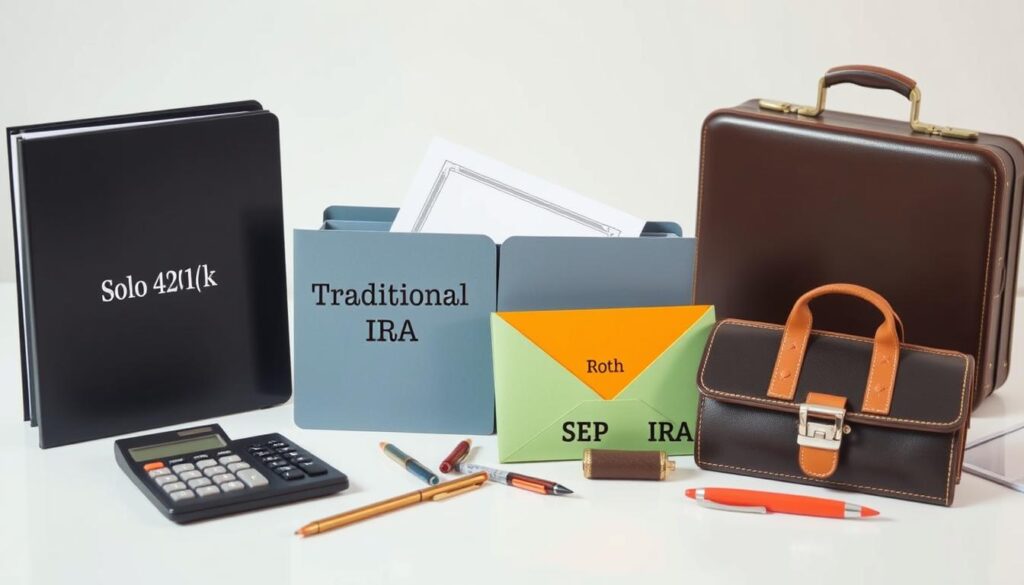
Traditional and Roth IRAs both offer tax benefits for retirement savings. Traditional IRAs let you deduct contributions from your taxes. Roth IRAs let you withdraw money tax-free in retirement. Both have a 2024 contribution limit of $7,000, with an extra $1,000 for those 50 and older.
Solo 401(k): A Powerful Tool for Self-Employment Retirement
The solo 401(k) is a strong choice for self-employed folks. In 2024, you can contribute up to $69,000. This includes up to $23,000 from your paycheck and up to 25% of your profits from your business. It’s great for those who earn a lot.
| Retirement Account | Contribution Limit (2024) | Key Features |
|---|---|---|
| Traditional and Roth IRA | $7,000 (plus $1,000 catch-up for those 50+) | Tax-deductible contributions (Traditional) or tax-free withdrawals (Roth) |
| Solo 401(k) | $69,000 (plus $7,500 catch-up for those 50+) | Highest contribution limit among self-employed retirement accounts |
| SEP IRA | $69,000 | Easy to set up and manage, suitable for high-earning self-employed individuals |
| SIMPLE IRA | $16,000 (plus $3,500 catch-up for those 50+) | Simpler setup and administration compared to a 401(k), lower contribution limits |
Self-employed folks can also look into SEP IRAs and SIMPLE IRAs. Each has its own limits and benefits. It’s key to think about your needs and goals to pick the right one.
Setting Your Retirement Goals
Planning for retirement is key to a secure financial future. You must look at your future financial needs and set realistic saving timelines. This means understanding your retirement lifestyle, estimating expenses, and considering healthcare costs.
Assessing Your Future Financial Needs
Imagine the retirement you want. Will you travel, pursue hobbies, or enjoy a relaxed life? Think about your monthly costs, like housing, utilities, and food. Also, remember to plan for healthcare expenses, which can be high.
Timelines for Saving: Short-Term vs. Long-Term
- Short-term goals: Build an emergency fund for unexpected costs and keep some savings easily accessible.
- Long-term goals: Save enough for your retirement lifestyle, covering years of living.
Use retirement calculators to figure out how much you need. Update your plan as your life changes or new info comes up.
“Successful retirement planning is not a one-size-fits-all approach. It requires a personalized strategy that aligns with your unique financial needs and lifestyle preferences.”
Setting realistic retirement goals and saving timelines are vital. By planning carefully, you can reach a fulfilling retirement.
How to Calculate Retirement Savings Needs
Figuring out how much you need for retirement is key to a secure future. You must look at your current and future costs. Also, think about inflation and market ups and downs.
Understanding Your Current and Future Expenses
Start by examining your current spending. This includes things like your home, utilities, food, and healthcare. Then, think about how these costs might change when you retire.
For example, you might spend less on housing and travel. But, healthcare could cost more. Use this info to guess your monthly and yearly retirement costs.
Factor in Inflation and Market Volatility
Inflation can really affect your savings over time. Use a 3% annual inflation rate to project your future costs. Also, remember that market swings can impact your investments.
The 4% rule is a good starting point for withdrawals. But, your situation might need a different rate. Online calculators can help you figure out how much to save each month or year.

“Retirement planning is not a one-size-fits-all approach. It’s essential to consider your unique circumstances and goals to ensure you have the necessary resources to maintain your desired lifestyle in retirement.”
Maximizing Your Contributions
As a self-employed home business owner, it’s key to boost your retirement savings. Knowing the contribution limits and strategies can help. This way, you can save more for a comfortable retirement.
Contribution Limits for Self-Employed Retirement Accounts
The limits for retirement account contributions depend on the account type. For 2024, a Solo 401(k) allows up to $69,000, or $76,500 if you’re 50+. SEP IRA contributions can be up to 25% of your earnings, maxing out at $69,000 in 2024. SIMPLE IRA contributions are up to $16,000 ($19,500 if 50+), with employer matching possible.
Traditional and Roth IRAs have a 2024 limit of $7,000 ($8,000 if 50+). Remember, income limits might affect your eligibility for these accounts. Always check the specific requirements.
Strategies for Consistent Contributions
- Set up automatic transfers from your business account to your retirement account to ensure consistent contributions throughout the year.
- Allocate a fixed percentage of your income to your retirement savings, such as 15% or more, to build long-term wealth.
- Increase your contributions as your income grows, taking advantage of the higher contribution limits.
- Consider making catch-up contributions if you’re 50 or older to boost your retirement savings.
By using these strategies, you can keep your retirement planning on track. This way, you can make the most of your self-employed retirement accounts.

“Consistent, disciplined saving is key to building a robust retirement nest egg as a self-employed individual. Explore all the options and contribution strategies to ensure you’re maximizing your retirement savings.”
Tax Benefits of Self-Employed Retirement Accounts
If you run a home business, you can save for retirement in special ways. These options offer tax benefits that can help you save more and pay less taxes now. This makes planning for retirement easier and can lower your taxes.
Understanding Tax Deductions Available to You
Contributing to a retirement account like a Solo 401(k) or SEP IRA can lower your taxes. You can deduct your contributions from your income. This means you pay less in taxes now.
In 2023, you can contribute up to $22,500 to a Solo 401(k), or $30,000 if you’re over 50. These deductions can reduce your tax bill.
You can also deduct health insurance premiums and home office expenses. These deductions make your retirement savings even more tax-friendly.
How Different Accounts Affect Your Tax Bill
The type of retirement account you choose affects your taxes later. Roth accounts, like Roth IRA or Roth Solo 401(k), offer tax-free withdrawals in retirement. You pay taxes now, but not later.
Traditional accounts like SEP IRA and Traditional Solo 401(k) give you a tax break now. But, you’ll pay taxes on withdrawals later. Knowing these differences helps you plan your taxes better.
Using tax benefits of self-employed retirement accounts is smart. Maximize your contributions and use deductions to lower your taxes now. This helps secure your financial future.

Diversifying Your Retirement Portfolio
As a self-employed home business owner, it’s key to diversify your retirement portfolio. This helps manage risk. Asset allocation spreads your investments across different asset classes. This mix of stocks, bonds, and real estate can help your portfolio grow over time.
Importance of Asset Allocation in Retirement Planning
Asset allocation is vital for self-employed folks. It reduces the risk of big losses in any single investment. By diversifying, you can keep your retirement savings on track, even when the economy is shaky. Also, different investments perform differently in different markets, which can balance out your returns.
Popular Investment Options for Self-Employed Workers
- Low-cost index funds: These funds track a broad market index, like the S&P 500. They offer steady long-term returns with low fees.
- Target-date funds: These funds adjust their mix of investments as you get closer to retirement. They become more conservative to protect your savings.
- Exchange-Traded Funds (ETFs): ETFs offer diversification and flexibility. They let you invest in a variety of securities that follow a specific index or sector.
When picking investments, think about your risk tolerance, time horizon, and financial goals. Regularly rebalancing your portfolio keeps it aligned with your goals. This ensures your retirement plan stays on track.
“Diversification is the only free lunch in investing.” – Harry Markowitz, Nobel Laureate in Economics
Devising a Withdrawal Strategy for Your Retirement Funds
If you own a home business, planning how to take money out of your retirement fund is key. The 4% rule is a common method. It suggests taking 4% of your savings in the first year and then adjusting for inflation each year after. But, you might need to tweak this rule based on your personal financial situation and the market.
Another strategy is the retirement bucket approach. This method divides your savings into two buckets. The short-term bucket has cash for immediate needs. The long-term bucket is for investments that grow over time. This strategy helps you manage risks and keep a steady income flow.
When to Start Pulling from Your Retirement Savings
When you start taking money out of your retirement accounts matters a lot for taxes. For traditional accounts like IRAs and 401(k)s, you must start taking required minimum distributions (RMDs) by age 72. But, Roth accounts let you withdraw money tax-free in retirement.
Tax Implications of Withdrawals from Different Accounts
It’s important to know how taxes work for different retirement accounts. Money from traditional accounts is taxed as regular income. But, money from Roth accounts is usually tax-free. By managing your withdrawals wisely, you can lower your taxes in retirement.
| Retirement Account | Tax Treatment of Withdrawals |
|---|---|
| Traditional IRA/401(k) | Withdrawals taxed as ordinary income |
| Roth IRA/401(k) | Qualified withdrawals are tax-free |
Creating a solid retirement withdrawal strategy is vital for home business owners. It ensures your retirement savings last and provide the financial security you need in your golden years.
The Role of Professional Financial Advisors
Working with a professional financial advisor is key for retirement planning, even more so for self-employed home business owners. They offer detailed advice to craft a strong retirement plan. They also help with tax efficiency and managing investments.
Benefits of Working with a Financial Planner
Financial advisors for small businesses and the self-employed bring many benefits. They include:
- Creating a retirement plan tailored to your goals, cash flow, and risk level
- Using tax-advantaged accounts to save more for the future
- Offering investment advice to diversify your portfolio and handle market ups and downs
- Helping with business succession planning for a smooth transition
- Providing overall financial guidance, including budgeting and risk management
How to Choose the Right Advisor for Your Needs
Choosing the right financial advisor is critical. Look for advisors who are fiduciaries, meaning they work only in your best interest. Also, find advisors with experience in working with self-employed individuals and small business owners. They understand your unique challenges better.
By teaming up with a skilled financial advisor, you can simplify retirement planning. You can then focus on growing your home-based business with confidence. Their advice ensures your financial future is secure.
Staying Flexible and Adapting Your Strategy
As a self-employed home business owner, being flexible and proactive in retirement planning is key. Your financial situation, business needs, and personal life can change over time. This means you need to regularly check and adjust your retirement plan.
When to Reassess and Adjust Your Retirement Plan
It’s a good idea to review your retirement plan every year or when big life events happen. This could be changes in your income, family, or business. By doing this, you can make sure your plan is up to date with your changing goals and life.
Importance of Being Proactive in Retirement Planning
Being proactive in retirement planning is very important for self-employed people. Keep up with changes in tax laws, retirement account rules, and industry trends. As your business grows and your income goes up, think about increasing your retirement contributions.
This will help you make the most of tax benefits and grow your savings. Also, adjust your investment strategy as you get closer to retirement. This ensures your portfolio is balanced and can handle market ups and downs. Being flexible and adaptable is key to managing retirement planning as a self-employed person.
Leave a Reply