

The workplace is changing fast, and different generations have different needs. Baby boomers, born between 1946 and 1964, are a big part of the workforce. Employers need to adjust to meet their unique needs and wants.
Baby boomers really like working from home or different places, with 40% preferring it. Only about 25% want to work in a traditional office. This shows a big shift towards flexible work, which is great for them.
As the workforce changes, it’s key for companies to understand and meet the needs of baby boomers. By 2032, people aged 65 and older will make up 8.6% of the workforce. This is the fastest-growing group. Giving them flexible work options can help keep and attract this valuable group. It also makes the workplace more inclusive and collaborative.
Key Takeaways
- Baby boomers are the most supportive of remote work, with 40% preferring to work remotely.
- Less than a quarter (25%) of baby boomers prefer working in a traditional office setting.
- By 2032, people aged 65 and older are projected to comprise 8.6% of the labor force, making them the fastest-growing demographic in the workplace.
- Flexible work arrangements can help organizations retain and attract the baby boomer generation, fostering a more inclusive work environment.
- Tailoring work options to the needs and preferences of different generations can enhance work-life balance and productivity.
Understanding Baby Boomers in Today’s Workforce
The American workforce is changing, and it’s key to grasp the traits and hurdles of baby boomers. Born between 1946 and 1964, they now make up a big part of the workforce. About 44.6 million baby boomers are working today.
Characteristics of Baby Boomers
Baby boomers are known for their hard work and dedication to their jobs. They are driven, ambitious, and focused on getting the job done. Yet, they prefer flexibility and control over their work lives.
Values and Work Ethic
The work ethic of baby boomers is unmatched. Many keep working well into their 60s and 70s. They are loyal, persistent, and aim to leave a lasting mark on their organizations.
Challenges Faced
Baby boomers bring a lot of experience and knowledge to work. But, they face challenges like adapting to new tech and changing work norms. They must navigate a workforce mostly made up of younger generations.
Today, five generations work together, creating unique challenges. Different communication styles and work preferences can lead to tensions. Employers must find ways to create a harmonious and productive work environment.
“The percentage of individuals between ages 62 and 64 who are ‘working or looking for work’ has increased over the past decade, highlighting the continued presence of baby boomers in the workforce.”
What Are Flexible Work Arrangements?
In today’s fast-changing work world, flexible work options are more common. They let workers control their schedules and where they work. These choices include remote work, flexible hours, and shorter workweeks. They help balance work and life and meet different lifestyle needs.
Definition and Types
Flexible work means workers have more say in when, where, and how they work. Some common options are:
- Remote work or telecommuting, where employees work from outside the office
- Flexible scheduling, which lets workers adjust their hours or work shorter weeks
- Job sharing, where two or more people share one full-time job
Benefits of Flexible Work
Flexible work has many benefits for both employers and employees. It leads to better work-life balance, higher job satisfaction, and meets different lifestyle needs. Research shows that flexible work makes employees more motivated and productive.
“Each generation values flexible work for different reasons: baby boomers for transition, Generation X for family, millennials for balance, and Generation Z for prioritizing life.”
Flexible work also reduces stress and burnout, boosting employee happiness. For employers, it’s a great way to attract and keep the best workers in a competitive job market.
The Rise of Remote Work
Remote work is now common, bringing both benefits and challenges to all ages, including Baby Boomers. Thanks to technology, older adults can keep working from home. This change has reshaped the work world.
Trends in Remote Work
Most people prefer talking in real-time (55%) over writing messages (45%) when working remotely. Yet, the need for remote jobs has changed. In the second quarter of 2023, fewer jobs were listed as remote compared to the year before. Despite this, many, like Millennials and Generation Z, choose to work remotely.
Technology Enabling Remote Work
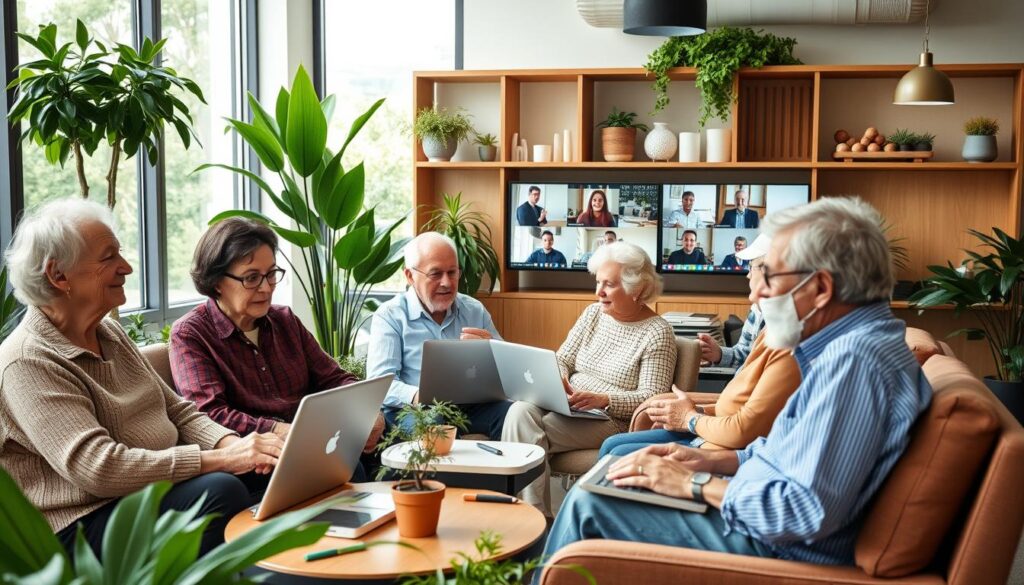
Modern tech has made it easier for older adults to work from home. This is often better for Baby Boomers. Tools like video calls and cloud apps help everyone stay connected and productive. As work changes, using these tech tools will help meet the needs of all ages, including Baby Boomers.
“Remote work has become a game-changer for many older adults, allowing them to maintain their careers and expertise while enjoying the flexibility and convenience of working from home.”
How Flexible Work Arrangements Benefit Baby Boomers
Flexible work options are becoming more popular among baby boomers. They help older workers ease into retirement while staying productive. This way, they can manage their personal and work life better.
Work-Life Balance Improvement
Flexible work, like part-time jobs or working from home, helps baby boomers find a better work-life balance. They can spend more time on hobbies, family, and health. This leads to higher job satisfaction and a better life.
Health and Wellbeing Considerations
Companies are now focusing on the health benefits of older workers. They offer flexible work to support their well-being. This includes health perks, mental health days, and resources for older workers.
“Flexible work arrangements have shown to decrease turnover rates for companies, helping them keep employees longer.”
Flexible work models benefit both workers and employers. Companies that offer these arrangements see better employee engagement and lower costs. They also attract and keep valuable baby boomer talent.
Different Types of Flexible Work Arrangements
The workforce is changing, and part-time schedules, job sharing, and telecommuting are now more common for baby boomers. These options let workers control their hours. This helps them manage personal tasks like childcare or school.
Part-Time Work
Part-time work means working fewer hours a week. This could be a four-day week or a nine-day fortnight. It’s great for baby boomers who want to retire or balance work and life better.
Job Sharing
Job sharing lets two or more people share one job. This way, baby boomers can work less but keep their skills sharp and contribute more.
Telecommuting Options
Telecommuting is now popular, with 83% of those 50+ wanting it most. It lets baby boomers work from home. This cuts down on travel time and gives them more control over their day.
“97 percent of respondents aged 50 and older believe a job with flexibility would positively impact their overall quality of life.”
These flexible work options are key for baby boomers. They help balance work and life. This leads to a better quality of life.
How Employers Can Support Baby Boomers
As the workforce changes, employers need to adapt to support all workers, including baby boomers. By focusing on their needs, companies can help older workers thrive. This creates a welcoming space where everyone can contribute fully.
Training and Development Opportunities
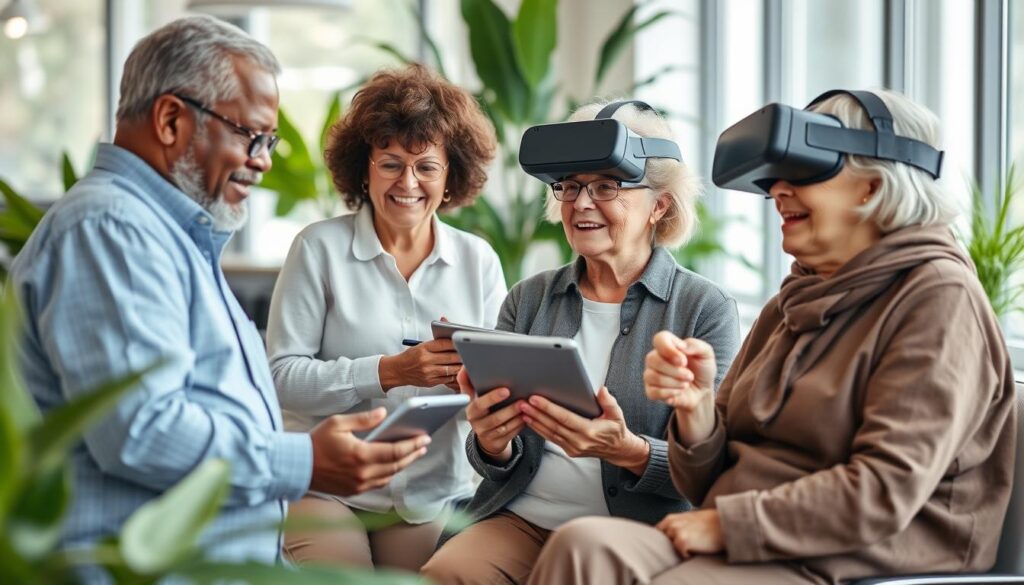
It’s key to keep baby boomers learning and growing. Employers should offer skill-building programs that fit their learning style. This helps them stay up-to-date and competitive.
Also, cross-generational mentoring can help everyone grow. It builds strong relationships between workers of different ages.
Inclusive Communication Strategies
Good communication is vital for a united team. Employers should use inclusive communication strategies that work for all. This means training on how to work together online and setting clear team rules.
It’s also important for managers to know how to lead teams from different places. This helps everyone work well together.
Health Benefits Tailored for Older Workers
As baby boomers get older, their health needs change. Employers can help by providing comprehensive health benefits for them. This includes coverage for regular check-ups, managing long-term conditions, and mental health services.
They should also help with work-life balance and caregiving. This shows they care about their workers’ overall well-being.
By focusing on development, communication, and health, companies can make a better work environment. This environment values the skills and experience of baby boomers.
“The key to creating an age-diverse workforce is to acknowledge the unique needs and perspectives of each generation, and then implement tailored strategies to support their professional growth and overall well-being.”
Overcoming Stigmas Associated with Aging Workers
Companies need to break free from old stereotypes and embrace diversity. More adults are working into their 70s, changing what we think of retirement.
Changing Perceptions of Aging
The aging population is now a key part of the workforce. By 2020, 25 million Baby Boomers will leave the workforce. Yet, workers over 55 will make up a big part of the workforce by 2015.
Success Stories of Older Workers
Showcasing success stories of older workers can change how we see them. For example, the University of Massachusetts Medical School lost 10% of its employees over 50 every year. They started strategies to keep aging workers.
By valuing the experience of older workers, companies gain a lot. They get a wealth of knowledge and expertise.
“The number of workers over age 55 is projected to increase significantly over the next 20 years, with this demographic group projected to comprise as much as one-fifth of the nation’s workforce by 2015.”
As the workforce changes, companies must see the value in age diversity. By overcoming stereotypes and sharing success stories, companies can innovate and grow.
Legal Considerations for Flexible Work Arrangements
Employers are now more open to flexible work options. It’s important to know the legal rules and age discrimination laws. Making sure work environments are fair and diverse is key for all employees, no matter their age.
Understanding Labor Laws
Flexible work setups, like working from home or job sharing, must follow labor laws. Employers need to make sure these plans meet rules on overtime, minimum wage, and breaks. Keeping policies up to date helps avoid legal problems.
Age Discrimination Protections
The Age Discrimination in Employment Act (ADEA) protects workers 40 and older. Employers can’t make decisions based on age. Flexible work should be fair for everyone, without age bias.
By understanding these laws and making policies that fit a diverse workforce, employers can create a better work place. This attracts and keeps talented workers of all ages.
“Flexible work arrangements are not just a perk, but a strategic imperative for organizations seeking to build an age-diverse and high-performing workforce.”
The Role of Technology in Flexibility
Technology is key for flexible work setups. It offers tools for teamwork and staying in touch, no matter where you are or when you work. But, it’s vital to make sure everyone, including Baby Boomers, knows how to use these tools well.
Tools for Collaboration and Communication
Today, collaboration tools and communication tools are must-haves. Video calls, cloud-based projects, and messaging apps keep teams connected. They make it easy to share ideas and work together, even from afar.
Training on New Technologies
Not everyone is quick to pick up new tech. Almost three out of four workers need better training for remote work. It’s important to teach older workers about new tech to make flexible work fair for everyone.
“With the right training and support, Baby Boomers can leverage technology to thrive in a flexible work environment, just like their younger counterparts.”
By focusing on tech training and encouraging learning, companies can help all employees. This way, everyone can enjoy the perks of flexible work and boost productivity and creativity.
Future Trends in Flexible Work for Baby Boomers
The workforce is changing, and Baby Boomers will play a big role. By 2032, people over 65 will make up 8.6% of workers. This makes them the fastest-growing group in the workplace.
Having an age-diverse workforce is key for success. Companies must adapt to support all generations. This includes flexible work options that fit everyone’s needs.
Predictions for Workforce Trends
Remote work is becoming more popular. Millennials and Gen Z want more flexibility, with 84% and 74% wanting it, respectively. But only 49% of Gen X and 32% of Baby Boomers feel the same way.
This shows companies need to meet the different needs of their workforce. They must tailor their policies to fit the needs of all generations.
Building an Age-Diverse Workforce
Small companies are more open to remote work. They allow it 23% of the time, compared to 4% for mid-sized and 9% for large companies. This trend could grow as Baby Boomers look for better work-life balance.
By embracing flexible work and diversity, companies can thrive. They can prepare for the future of work by supporting all generations. This is important for long-term success in the future of work.

Leave a Reply