

As a military spouse, moving to a new state can be tough. You face challenges when you have to change your professional licenses. But, with the right help and knowledge, you can keep your career going strong. This guide will give you the tools and info you need to smoothly move your licenses and adapt to new rules.
The Spouse Education and Career Opportunities (SECO) program and the Military Spouse Employment Partnership (MSEP) are great resources. They help military spouses keep their careers on track. SECO offers advice on career growth, education, and job help. MSEP connects you with employers who want to hire military spouses in jobs that can move with you.
Key Takeaways:
- Military spouses face unique challenges when relocating due to PCS orders, including high unemployment rates and difficulty transferring professional licenses.
- The Spouse Education and Career Opportunities (SECO) program and Military Spouse Employment Partnership (MSEP) offer resources and support for military spouses seeking career continuity.
- Understanding the licensing requirements and processes in different states is key for successfully transferring your professional license during a PCS move.
- Using interstate compacts and military-specific resources can make the license transfer easier.
- Showing off your transferable skills and unique military spouse experiences can make you stand out in the job market.
Understanding the Importance of Professional Licensing
Professional licensing is key for military spouses who want to keep working as they move to new states. It shows they are skilled and ready to work in their new home. But, moving often can make it hard to get the right licenses in time.
Why Licensing Matters for Military Spouses
More than 35% of military spouses need licenses for their jobs. They move every 1 to 3 years, making it hard to keep their careers going. Helping them keep their licenses helps them grow professionally and find jobs.
The Challenges of Relocation
Getting the right licenses in new states is tough for military spouses. Before a new law, it was hard to move licenses. This caused money problems, job losses, and even made some families leave the military.
Professional Growth and Opportunities
Despite the hurdles, licenses open doors for military spouses. A new law makes it easier to move licenses to new states. This is thanks to former First Lady Michelle Obama’s push for change. Now, there’s hope for military spouses in licensed jobs.
Key Licensing Requirements by State
For military spouses, dealing with professional licensing across state lines can be tough. Each state has its own rules, which can change a lot. Knowing these rules is key for keeping a career going when moving for a PCS.
Overview of State-Specific Regulations
Every year, 14.5% of military spouses move to a new state. This is much more than the 1.1% of civilians who do. For those in the workforce, up to 34% need full licenses. Yet, 19% of them face issues keeping their licenses up to date.
Common Fields Requiring Licenses
- Healthcare
- Education
- Real estate
- Childcare
- Food services
Researching State Requirements Before Moving
Before moving, military spouses should look up the licensing needs for their job in the new state. The CareerOneStop Licensed Occupations page is a great resource. It shows which jobs and states need licenses or certifications. Many states are working to make it easier to get licenses, like through endorsement or temporary licenses.
| State | Licensing Accommodations |
|---|---|
| Florida | No state income tax, allowing military spouses to avoid the tax burden of relocating and filing in a new state. |
| Texas | No state income tax, providing a similar tax advantage for military spouses. |
| 44 states | Allow military spouse attorneys to begin working within 30 days, with efforts in progress in four other states. |
By learning about interstate licensing compacts and occupational licensing reform in different states, military spouses can better handle licensing issues. This helps them keep their careers going during PCS moves.
Resources for Military Spouses
Military spouses face many challenges, including professional licensing and moving. Luckily, they have many resources to help with their career changes. The MyMilitary OneSource website is one such resource. It offers tools and support services for military families.
National Military Spouse Network
The National Military Spouse Network (NMSN) is a great organization for military spouses. It connects them with others, providing a space for networking and sharing experiences. Military spouses can find career resources, educational chances, and a community that gets military life.
State Licensing Boards Overview
Each state has its own rules for professional licenses. Military spouses can look up the licensing boards and rules for their field in their current and future locations. Knowing these rules helps them smoothly transition as they move.
Online Certification Platforms
Today, military spouses can find many online platforms for certifications. These platforms offer flexible learning options. They let spouses improve their skills while managing military life’s demands.
| Resource | Description | Key Benefits |
|---|---|---|
| Military OneSource | A wide range of tools and support for military spouses, covering many military life topics. | Help with career growth, relationships, health, parenting, and more. |
| National Military Spouse Network (NMSN) | A professional group that connects and supports military spouses through networking and education. | Access to a community, career workshops, and job help. |
| Online Certification Platforms | Digital places for flexible learning to improve professional skills. | Chance to keep learning and getting new certifications, fitting military life. |
By using these resources, military spouses can handle the challenges of licensing and moving. This ensures their military spouse career stays important, even with military life’s unique challenges. These resources are key in supporting professional licensing reciprocity for this strong and dedicated group.

Transferable Skills and Experiences
As a military spouse, you have many skills and experiences that are very valuable. You’re great at adapting to new places, staying strong, and solving problems. These skills make you a top choice for many jobs.
Highlighting Military-Spouse Skills
Show off your ability to adapt, solve problems, and communicate well. These skills come from moving around a lot and dealing with military life. Talk about how you’re good at doing many things at once, staying organized, and working well under pressure.
Emphasizing Unique Experiences in Applications
Your life as a military spouse makes you stand out. Talk about how you handle change, are sensitive to different cultures, and help your community. These show you’re ready to join diverse teams and handle new situations easily.
Adapting Resumes for Different States
Use the MySECO Resume Builder to make resumes that fit specific jobs and state rules. This way, you show off your skills in the best light, helping you get interviews and jobs.
Networking is key when you move for a job. Join the MSEP Spouse Group on LinkedIn. It’s a great way to meet people who can help you find jobs and offer advice.
“The new Army directive permits reimbursement of up to $1,000 for business-related expenses in addition to the already authorized $1,000 for relicensing fees due to relocation.”
The Military Spouse Career Accelerator Pilot has over 250 employers in its program. More than 100 Army spouses are part of it. They’ve found jobs paying around $60,000, showing how valuable their skills are.
The DOD Military Spouse Employment Partners program has over 700 partners. They actively look for, hire, promote, and keep military spouses. They know how much value you bring.
Steps to Transfer Your License
For military spouses, moving your license can seem hard. But it’s key to keep your career going smoothly when you move. Knowing the steps helps make the process easier and keeps your career on track.
Initiating the Licensing Process
Start by visiting the Military Spouse Interstate License Recognition Options website. It shows what you need for your job in each state. Begin early, about 30 days before you move, to avoid delays.
Submitting Your Application
When you apply, tell them you’re a military spouse. This might get you special help like fee waivers or faster service. Make sure you have everything you need and send it in quickly to the state board.
Following Up with State Boards
After you apply, check in with the state board. Ask if they got everything and if they know when they’ll decide. Keeping in touch helps solve any problems fast and gets things done sooner.
| Key Statistics | Insights |
|---|---|
| Nearly 40% of military spouses in the workforce have careers that require professional licensing. | The need for license transfer is significant, highlighting the importance of streamlining the process for military families. |
| The Military Spouse Licensing Relief Act was signed into law in January 2023, allowing military spouses to transfer their licenses to all 50 states. | This new legislation provides valuable accommodations for military spouses, easing the burden of relocation and maintaining their professional careers. |
| The Defense Department estimates about 132,000 active duty spouses have careers requiring professional licensing. | The sheer number of military spouses affected underscore the need for complete support and resources in the license transfer process. |
By following these steps and using the resources available, military spouses can make the license transfer process easier. This ensures a smooth career transition when moving.
Educational Considerations
For military spouses, getting a professional license is a big deal. They often need to keep learning to keep their licenses. The rules for this vary a lot, depending on the state and job.
Continuing Education Requirements
Every state has its own rules for continuing education. Military spouses might find it hard to keep up because they move a lot. It’s important to know the rules in each state to keep their licenses.
Potential Barriers in Different States
There are more challenges than just different education rules. Some states might have extra classes or fewer choices for credits. This can make it tough for military spouses to keep their careers going.
Finding Online Courses and Programs
But, there’s good news. Online learning has made it easier for military spouses to keep up with their careers. Many states now offer or accept online courses and programs to fulfill continuing education requirements. This is a big help for them, letting them keep their licenses and move up in their military spouse career.
The SECO (Spouse Education and Career Opportunities) program from the Department of Defense is a great resource. It helps military spouses find education that fits their lifestyle.

Utilizing Interstate Compacts
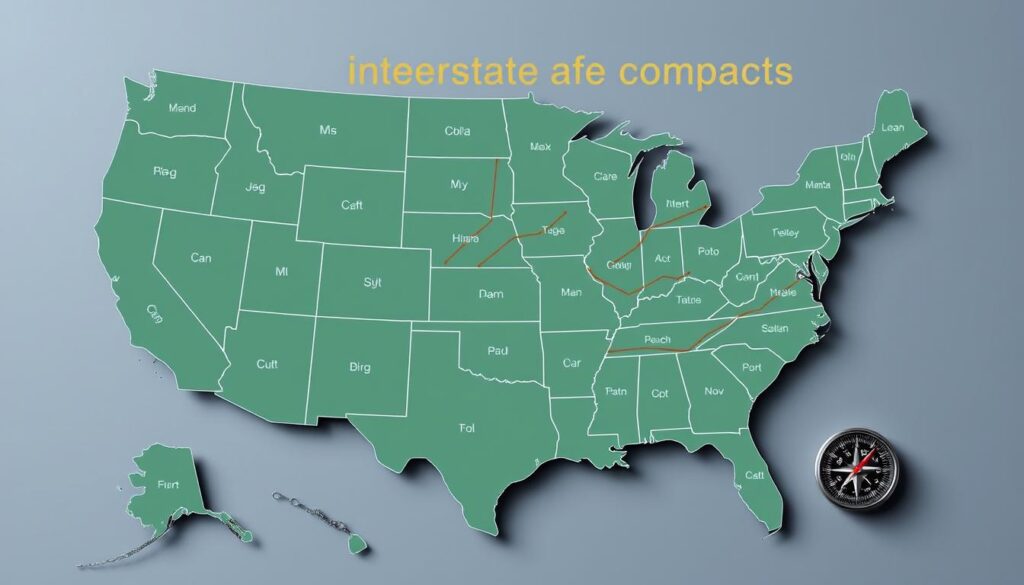
As a military spouse, dealing with different states’ licensing rules can be tough. But, interstate licensing compacts offer a way to make it easier. These agreements set common standards, letting you work in other states more easily. This is called licensure portability.
What Are Interstate Compacts?
Interstate compacts are agreements between states to make licensing easier. By joining, states agree to accept each other’s standards. This helps professionals, like military spouses, get licenses in many states.
States Participating in Compacts
- North Carolina is part of the Nurse Licensure Compact (NLC), Physical Therapy Compact (PTC), and more.
- Other compacts include the Interstate Medical Licensure Compact (IMLC) and the Social Work Licensure Compact.
Benefits for Military Spouses
Interstate compacts help military spouses keep their careers going. They make moving easier, cheaper, and faster. This is great for those who need to work in different states or move often.
“Interstate compacts are a game-changer for military spouses, allowing them to focus on their careers instead of navigating complex licensing requirements every time they move.”
Military spouses should look into which states have compacts for their job. Using these resources can make getting licensed much simpler when they move.
Seeking Support from Military Resources
Being a military spouse can make getting a professional license tough. But, there are many resources to help you. The Military OneSource is a great place to start. It offers career advice and help with licenses for military families.
The Transition Assistance Program (TAP) is also very helpful. It helps with career planning, making resumes, and finding jobs. This makes moving to a new place easier.
Local support groups are also key. Family Support Centers at military bases offer specific help for spouses. They provide info on state licenses and help you meet people. The Spouse Ambassador Network helps you get known in your area, too.
Using these resources can make getting a license easier. It helps you find better jobs and get more opportunities. This is good for your career as a military spouse.
“The support I received from the local Family Support Center was invaluable during my relocation. They helped me understand the licensing requirements in my new state and connected me with networking events that led to my next job.”
Navigating Unique State Regulations
For military spouses, knowing state-specific licensing rules is key. State reciprocity agreements can make transferring licenses easier. But, each state and profession has its own rules.
Understanding Reciprocity Agreements
State reciprocity agreements help military spouses use their licenses in new places. But, each agreement is different. It’s vital to check the details for your profession.
Special Considerations for Healthcare Licenses
Healthcare jobs have special licensing needs because of their importance. Military spouses in healthcare might face extra steps like exams or background checks. Staying informed and talking to licensing boards can help.
Legal and Educational Professions
Legal and education jobs also have unique rules. Sometimes, you might need to pass a state exam or take extra classes. Knowing these rules helps military spouses prepare for a smooth move.
| Profession | Common Licensing Challenges | Recommended Strategies |
|---|---|---|
| Healthcare | State-specific exams, background checks, continuing education requirements | Research state-specific regulations, communicate proactively with licensing boards, consider temporary or provisional licenses |
| Legal | State bar exams, additional coursework, transferring bar membership | Explore reciprocity agreements, consider temporary or provisional licensing, investigate online educational options |
| Education | State-specific certification requirements, background checks, continuing education | Utilize interstate compacts, communicate with state education departments, consider alternative teaching certifications |
By knowing the licensing rules in their new state, military spouses can better navigate occupational licensing reform and reciprocity. This ensures a smoother transition and career growth.
Personal Stories and Testimonials
Being a military spouse can make getting a professional license tough. But, hearing from those who’ve done it can give great advice and motivation. Amy Damele, an Air Force spouse, got a scholarship from the National Military Family Association (NMFA) to become a Military and Family Life Counselor.
Amy’s story shows how important it is to use the help available to military spouses. The NMFA scholarship cut down on her costs, making her dream job possible. She also found a strong support network in the military spouse community, which helped her career grow.
“Networking with other military spouses can be incredibly beneficial. The support and guidance you receive from this community is invaluable.”
The NMFA offers many resources, like scholarships, resume help, and job fairs. These tools are key for military spouses like Amy, helping them learn, grow, and find jobs. They show that with hard work and determination, military spouses can achieve their career goals.
Military spouses face big challenges, like moving a lot, being apart from their families, and managing the home alone. These issues can hurt their careers and finances. That’s why support systems are so important. Laws like the “Military Spouse Hiring Act” try to help by encouraging businesses to hire military spouses.
Sharing their experiences, military spouses like Amy can motivate and help others. By networking, using resources, and staying strong, military spouses can build rewarding careers. They show that it’s possible to succeed, despite the unique hurdles they face.
Looking Ahead: Future Trends in Licensing
The world of work is changing fast, and military spouses have a lot to look forward to. With more people working from home, there are now flexible licensing options. This means you can find jobs in places you might not have thought of before.
New industries like tech and digital services are also on the rise. These fields might be a great fit for your lifestyle as a military spouse. They offer promising career paths that you can follow wherever you go.
The Shift Towards Remote Licenses
The COVID-19 pandemic has changed how we think about work and licenses. Now, many places are working on making licenses more flexible and portable. This is good news for military spouses who move a lot.
These changes could include easier ways to get licenses across different states. You might even see digital licenses become more common. This would make it simpler to keep your professional credentials up to date, no matter where you are.
Emerging Industries for Military Spouses
Military spouses are finding great jobs in tech and digital services. These fields often let you work from anywhere, which is perfect for those who move a lot. You can use your skills and knowledge without being stuck in one place.
When looking into these new areas, remember to check if you need any special licenses. It’s important to find out what certifications you need to get started.
Preparing for Changes in Licensing Regulations
It’s important to keep up with changes in licensing rules. By pushing for better portability in licenses, you can succeed in the changing job market. Join groups and talk to state licensing boards to make sure your voice is heard.
This way, you can help shape the future of licensing. It’s all about staying informed and advocating for what you need as a military spouse.

Leave a Reply