

The shift to remote work has changed how we do our jobs. As you move into this new world, having the right tools is key. Your home office needs the right setup for both comfort and productivity.
Today, work from home tools are a must, not just a nice addition. A well-set home office can turn a tough day into a successful one. Let’s look at the essential items and software to improve your remote work life.
Key Takeaways
- Essential work from home tools boost productivity
- Ergonomic setups prevent physical strain
- Digital collaboration tools facilitate teamwork
- Reliable internet is key for remote work
- Time management apps help maintain focus
- Cloud storage ensures data accessibility and security
Understanding Remote Work Essentials
Remote work is now common in our jobs. To do well in this setup, you must know the basics. Let’s look at what makes remote work successful.
The Importance of a Dedicated Workspace
Having a dedicated workspace is key for remote work success. It should be different from your living area. This helps keep work and personal life separate.
A dedicated space tells your brain it’s time to work. This boosts your focus and cuts down on distractions.

You don’t need a whole room for a workspace. It could be a corner of your living room or a spot in your bedroom. The important thing is to be consistent. Use this space only for work to create a routine and a productive mindset.
Creating an Ergonomic Setup
An ergonomic home office is vital for your health and work performance. Start with a good chair that supports your back. Your desk should be at a height where your elbows are at 90 degrees when typing.
Your computer screen should be at eye level to avoid neck pain.
“A well-designed workspace is an investment in your health and productivity.”
Here are some key elements for an ergonomic home office:
- Adjustable chair with lumbar support
- Standing desk or desk converter
- Ergonomic keyboard and mouse
- Proper lighting to reduce eye strain
By focusing on a dedicated workspace and an ergonomic setup, you’re ready for remote work success. These basics will help you stay focused, comfortable, and productive all day.
Must-Have Technology for Remote Work
Remote work essentials are key in today’s digital world. To do well in a virtual setting, you need the right tools and gear. Let’s look at the tech that can make your remote work better.
Laptops and Desktops: What to Consider
Choosing the right computer is vital for remote work success. Look for devices with:
- Fast processors
- Ample RAM
- Long battery life (for laptops)
- High-quality webcams

Accessories That Boost Productivity
Make your workspace better with these accessories:
- Dual monitors for multitasking
- Noise-canceling headphones
- Ergonomic keyboard and mouse
- Adjustable desk lamp
These items can make your remote work more comfortable and efficient.
Software Solutions for Effective Collaboration
Good software tools are essential for virtual team work. Consider these options:
- Video conferencing platforms (Zoom, Microsoft Teams)
- Project management tools (Trello, Asana)
- Cloud storage services (Google Drive, Dropbox)
- Communication apps (Slack, Discord)
These tools help teams work together smoothly, no matter where they are.
Investing in these remote work essentials will help you create a productive home office. It supports effective virtual team collaboration.
Communication Tools for Remote Teams
Staying connected is key for remote teams. The right tools can make a big difference. Let’s look at some essential tools for keeping remote teams in sync.
Video Conferencing Platforms
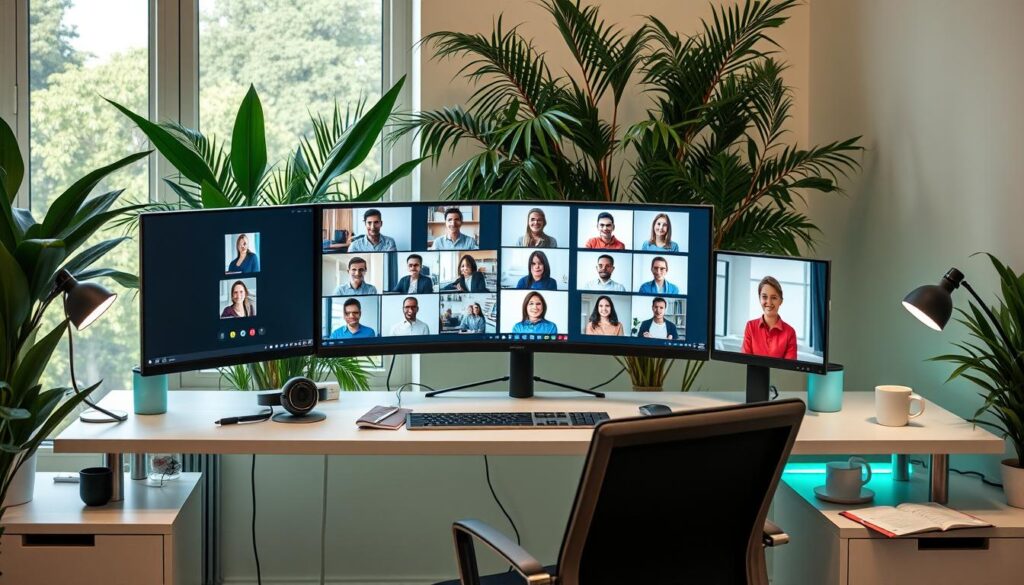
Video calls are vital for remote teams. Zoom and Microsoft Teams are top choices. They offer features like screen sharing and virtual backgrounds.
Instant Messaging Apps
Quick chats and updates are essential. Slack is a favorite for its channels and integrations. These apps help solve problems fast and keep conversations flowing.
Project Management Software
Managing projects needs more than just talking. Asana and Trello are great for visual task management. They help teams organize, set deadlines, and track progress.
“Effective communication is the bridge between confusion and clarity in remote work.”
Using these tools together, remote teams can create a smooth communication system. This setup boosts collaboration, productivity, and keeps teams connected, no matter the distance.
Productivity Tools to Stay Focused
Working from home can be tough to stay focused and manage your time well. Luckily, many productivity apps are here to help. Let’s look at some key tools to boost your remote work efficiency.
Time Tracking Applications
Time tracking apps are vital for knowing how you spend your work hours. RescueTime is a top pick that runs in the background, logging your computer activities. It gives detailed reports on your productivity, showing you what wastes your time and how to better schedule.
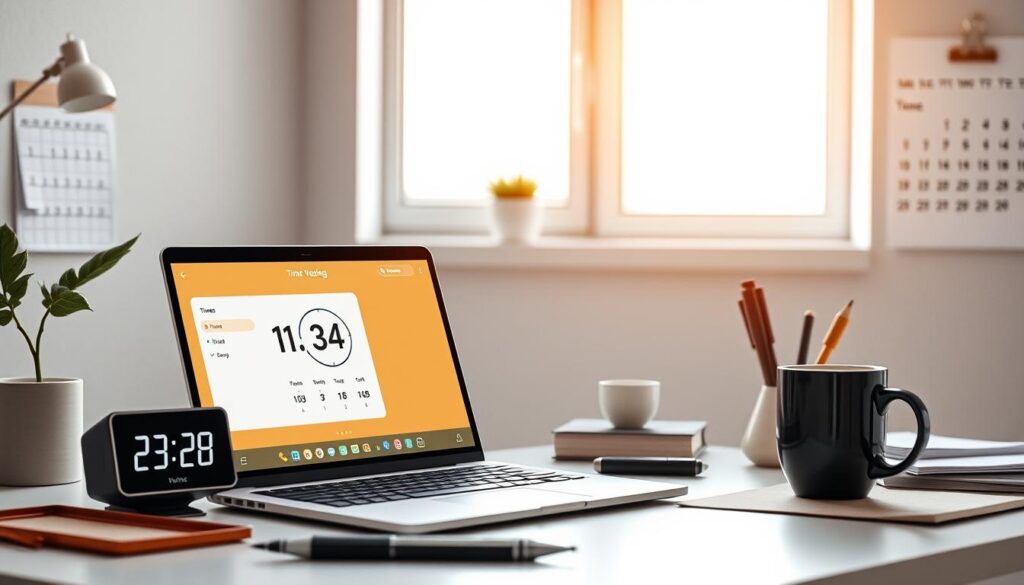
Toggl is another great tool for tracking time on specific tasks. It’s ideal for freelancers who need to bill clients right or anyone wanting to improve their time management.
Task Management Systems
Good task management is essential for staying productive while working remotely. Todoist is a flexible app for organizing, planning, and working on projects together. You can make tasks, set deadlines, and sort your work easily.
Trello is great for visual thinkers, using boards to manage tasks. Its simple design lets you move tasks through stages, showing your progress clearly.
“The key is not to prioritize what’s on your schedule, but to schedule your priorities.”
By using these productivity apps daily, you can build strong time management habits. These habits will help you stay focused and efficient in your remote work.
Setting Up Your Home Office
Creating a good home office is key for working from home. A well-designed space can make you more productive and comfortable. Let’s look at how to set up your perfect home office with the right spot and essential furniture.
Choosing the Right Location
Find a quiet spot in your home for your office. Look for a place with natural light and few distractions. A spare room, a corner of your bedroom, or even a converted closet can work well. The main thing is to have a dedicated space that keeps your work and personal life separate.
Essential Furniture for Comfort
Invest in furniture that supports your body and helps you stay in good posture. An ergonomic chair is a must-have for any home office. Look for one with adjustable height, lumbar support, and armrests. Pair it with an adjustable desk to create a versatile workstation.
Consider these remote work essentials for your home office:
- A sturdy desk with ample workspace
- A comfortable, supportive chair
- Proper lighting to reduce eye strain
- A footrest for improved posture
- Storage solutions to keep your space organized
Remember, your ergonomic home office setup should be tailored to your needs. Try out different layouts and furniture arrangements to find what works best for you. With the right setup, you’ll create a productive and comfortable workspace that improves your remote work experience.
Internet Connectivity and Equipment
A stable internet connection is key for remote work. It affects your productivity and team communication. Let’s look at what you need for internet and equipment.
Importance of a Reliable Connection
A fast and stable internet is essential for remote work. It makes video calls smooth, file transfers quick, and keeps cloud tools accessible. When picking an internet service, look at speed, reliability, and support.
Choose a plan with at least 100 Mbps download and 10 Mbps upload speeds. This ensures the best performance.
Recommended Routers for Remote Work
Getting a good router is critical for a strong connection. Look for routers with:
- Dual-band or tri-band capabilities
- MU-MIMO technology for multiple device support
- Advanced security features to protect against cyber threats
Top router brands for remote work are Netgear, ASUS, and TP-Link. They offer great performance and security for your work data. Always update your router’s firmware for the best security and performance.
“A reliable internet connection is the lifeline of remote work. Invest in quality equipment to ensure you stay connected and productive.”
By focusing on your internet setup, you’ll build a strong remote work base. This investment boosts your productivity and team collaboration.
Health and Wellness Considerations
Working from home can be tough on your health and happiness. It’s key to keep work and personal life in balance. Here are some tips and essentials for staying healthy and productive while working remotely.
Staying Active While Working from Home
Sitting too long can harm your body. Make sure to move around:
- Take short walks during breaks
- Use a standing desk for part of your day
- Try desk exercises like stretches or leg lifts
Mental Health Tips for Remote Workers
Your mental health is as vital as your physical health. Here are ways to keep a positive mind:
- Set clear boundaries between work and personal time
- Practice mindfulness or meditation
- Connect with colleagues virtually for social interaction
- Take regular breaks to avoid burnout
Remember, these tips are key for your well-being. By focusing on your health, remote work can be more fun and lasting.
“Taking care of yourself doesn’t mean me first, it means me too.” – L.R. Knost
The Role of Cloud Storage
Cloud storage is key for remote work. It lets you access files from anywhere. This makes it essential for today’s remote teams. Let’s look at top cloud solutions and security for remote work.
Best Cloud Storage Solutions
When picking a cloud storage provider, think about storage, ease of use, and tool integration. Here are some top choices:
- Google Drive: It has great collaboration tools and works well with Google Workspace
- Dropbox: It’s easy to use and syncs files well
- OneDrive: It’s perfect for Microsoft 365 users
Security Considerations for Remote Work
Remote work means you need strong cybersecurity. Here’s how to protect your data:
- Use strong, unique passwords for all accounts
- Enable two-factor authentication
- Encrypt files before uploading to the cloud
- Regularly update software and operating systems
Following these steps keeps your data safe. Cloud computing is vital for secure remote work.
“Cloud storage is not just about storing data; it’s about enabling seamless collaboration and ensuring business continuity in the digital age.”
Using cloud storage and focusing on security builds a strong remote work base. This way, you can stay productive and keep your data safe, no matter where you work.
Tips for Balancing Work and Home Life
Working from home gives you flexibility but can mix up work and personal life. It’s key to find a balance for both productivity and happiness. Here are some tips to help you succeed in your home office.
Establishing Clear Boundaries
Make clear lines between work and personal time. Choose a specific spot in your home for work. When your workday ends, leave that area to start your personal time.
Start your day like you would if you were going to an office. Get dressed, have breakfast, or take a short walk. These actions help you get into work mode.
Creating a Flexible Schedule
Use the flexibility of remote work to fit your life. Find your best work hours and tackle tough tasks then. Make sure to take breaks to rest and avoid burnout.
- Use time-blocking to allocate specific hours for tasks
- Schedule regular breaks to step away from your desk
- Set boundaries with family members about your work hours
Good remote work policies help keep work and life in balance. Share your schedule with colleagues and respect their time. With these tips, you can make your remote work both productive and fulfilling.
Enhancing Remote Work Culture
Creating a strong remote work culture is key for teams working from home. As more people work remotely, companies must build a positive space. This space should encourage connection and productivity.
Building Team Relationships
Building relationships in remote work requires effort. Start by setting up regular team meetings. These meetings can be about anything, not just work. Virtual coffee breaks or lunch dates help team members connect.
Encourage everyone to talk openly. Create spaces for casual chats, just like in an office.
Use tools made for remote work culture to stay in touch. Video calls make team members feel more connected. Don’t forget to celebrate team wins and milestones, even when you’re apart.
Virtual Team-Building Activities
Fun team-building activities are a must for remote work. Here are some ideas:
- Virtual escape rooms
- Online trivia games
- Remote book clubs
- Digital coffee roulette (randomly pairing team members for casual chats)
These activities boost morale and strengthen team bonds. They offer chances for employees to interact and feel part of a community, even in a virtual space.
“The best remote work cultures are those that prioritize human connection and shared experiences, despite physical distance.”
By focusing on relationships and team activities, you can build a thriving remote work culture. This culture supports productivity and job happiness. A strong culture is essential for successful virtual team collaboration.
Continuous Learning and Development
Remote work isn’t just about tools. It’s also about growing personally. Learning continuously keeps you ahead in a changing work world.
Online Courses for Remote Workers
The digital world offers many learning chances. Sites like Coursera and LinkedIn Learning have courses for remote workers. They teach skills like time management and digital marketing.
Look for courses that boost your skills or teach new ones. This shows you’re proactive and serious about your career. Many bosses appreciate workers who keep learning.
Networking in a Remote World
Even from home, making connections is key. Look for virtual networking events and online groups. Join webinars, LinkedIn groups, or virtual conferences.
Networking is more than finding jobs. It’s about sharing ideas, learning from others, and staying in touch with your field. It can also spark creativity and keep you motivated.
“Continuous learning is the minimum requirement for success in any field.” – Brian Tracy
By focusing on learning and networking, you’re not just adapting to remote work. You’re setting yourself up for success in the future.
Future of Remote Work: Trends to Watch
Remote work is changing fast. New trends are making it easier to work together and stay productive from anywhere.
The Shift to Hybrid Work Models
More companies are moving to hybrid work models. This mix of working from home and the office gives you flexibility. You might work from home some days and go to the office on others.
This approach tries to get the best of both worlds. It helps teams work together online while keeping the personal touch of face-to-face meetings.
Technology Innovations Shaping Remote Work
New tech is changing remote work. Virtual reality meetings are becoming more common. They make it feel like everyone is in the same room.
AI tools are also making a big difference. They help with tasks and offer smart help. These changes are changing how we think about working remotely.
As remote work grows, it’s important to keep up with these trends. By using new tech and adapting to hybrid models, you can succeed in the changing remote work world. Keep an eye on these trends to stay ahead in your virtual work environment.

Leave a Reply