

Starting a home business in the United States has many legal steps to follow. You need to get the right licenses and permits. You also have to understand tax laws and employment rules. It might seem hard, but with the right info, you can start strong and avoid problems.
This guide will help you understand the legal side of starting a home business in the United States. Knowing the rules and best practices helps your business run smoothly and safely from the start.
Key Takeaways
- Understand the legal requirements for starting a home-based business, including licenses, permits, and tax obligations.
- Research local zoning laws and obtain necessary home occupation permits to operate your business from your residence.
- Register your business, choose the appropriate legal structure, and obtain an Employer Identification Number (EIN).
- Comply with state-specific licensing requirements, specially for regulated professions.
- Ensure you have the necessary insurance coverage and protect your intellectual property.
Understanding the Basics of Home-Based Businesses
Starting a home-based business is appealing to many. It offers flexibility, low costs, and a better work-life balance. Knowing the basics is key to following the law and getting the most out of it.
What is a Home-Based Business?
A home-based business runs from the owner’s home. It can be in many fields, like freelance work, online stores, consulting, or creative projects.
Benefits of Starting a Home-Based Business
- Low startup costs: You save on overhead because you work from home.
- Flexible schedule: You can manage your work and personal life better.
- Tax deductions: You might get tax breaks for home expenses, like utilities and rent.
Common Types of Home Businesses
- Freelance services (e.g., writing, graphic design, web development)
- E-commerce (selling handmade products, drop shipping, or online retail)
- Consulting and professional services (e.g., accounting, coaching, IT support)
- Creative businesses (e.g., photography, music production, arts and crafts)
It’s important to know about home-based businesses to follow the law and enjoy their benefits. As more people start their own businesses, new ideas keep coming up. This gives aspiring entrepreneurs many options.
“The beauty of a home-based business is the ability to turn your passion into a profitable venture, all while maintaining the flexibility to prioritize your personal life.”
Researching Local Laws and Regulations
Starting a home-based business means you need to know the local laws. Zoning laws, home occupation permits, and business licenses differ by area. It’s key to study these rules well.
Zoning Laws and Restrictions
Your local government’s zoning regulations decide what businesses can be in residential areas. Some places ban certain types of businesses. Others have rules for size, signs, and parking. Make sure you know these zoning regulations before starting.
Home Occupation Permits
You might need a home occupation permit to run a business from home. These permits make sure your business follows local rules and doesn’t bother neighbors. The application and what you need can change, so check your area’s rules.
Local Business Licenses and Permits
You might also need local business licenses and permits, depending on your business. These include general licenses, specific permits, and other certifications. Not getting the right licenses can lead to fines or even closing your business. So, it’s important to follow these rules.
By understanding the local laws for your home-based business, you can start smoothly. This way, you avoid legal problems later on.
Registering Your Business
Starting a home-based business in the USA means you must register it properly. This includes choosing the right business structure and getting the right licenses. Knowing these steps is key for every entrepreneur.
Choosing the Right Business Structure
First, decide on your business’s legal structure. You can choose from sole proprietorship, LLC, S corporation, or C corporation. Each has its own benefits and downsides. Think about what you need for your business to find the best fit.
Filing for a Business Name (DBA)
If your business name is different from your personal name, you need to register it. This is called a “Doing Business As” (DBA) filing. It makes your business name official and helps with banking and invoicing.
Obtaining an Employer Identification Number (EIN)
An Employer Identification Number (EIN) is a nine-digit number from the IRS. It’s needed for corporations, partnerships, and businesses with employees. It’s used for taxes, hiring, and opening bank accounts.

By following the registration process, you build a strong legal base for your business. It ensures you follow local, state, and federal laws. This protects your assets and helps your business grow.
Understanding Tax Obligations
As a home-based business owner, knowing your tax duties is key. You’ll face self-employment tax on top of regular income tax. Make sure to get a state tax ID if needed. Learning about home business deductions can help you save on taxes and keep more of your earnings.
Federal Tax Requirements
Home-based businesses must pay income tax on profits at the federal level. The tax rate depends on your business type and income. You’ll also need to pay self-employment tax for Social Security and Medicare.
State and Local Tax Considerations
States and local areas often have their own taxes for businesses. This includes sales tax, franchise tax, and personal property tax. It’s important to check your area’s rules to follow them.
Important Deductions for Home Businesses
- Home office deductions: You can deduct a part of your home expenses if you use it for business.
- Business use of your car: Deduct a part of your car costs like gas and insurance if you use it for work.
- Office supplies and equipment: You can deduct the cost of office supplies, computers, and furniture.
- Professional development: Costs for education, conferences, and memberships can be tax-deductible.
Using these deductions can lower your taxable income and save you money. Keep detailed records of your business to be ready for audits.
“Taxes are the price we pay for a civilized society.” – Oliver Wendell Holmes Jr.
Complying with State Licensing Requirements
Starting a home-based business in the USA means you must understand state licensing rules. Following these rules makes your business legal and protects it from legal problems later.
Professional Licensing for Specific Industries
Professions like law, medicine, accounting, and cosmetology need special licenses. These licenses show you’re qualified and trustworthy. It’s key to find out what licenses you need for your field.
General Business Licenses by State
Most states also need general business licenses, no matter the industry. These licenses cover basic business tasks like sales and taxes. Getting these licenses is a big step in making your business official.
Keeping Track of Expiration and Renewals
Staying compliant isn’t just a one-time thing. You must keep track of when your licenses expire. Renewing them on time shows you’re serious about following the rules. This helps avoid fines or even shutting down your business.
| License Type | Renewal Frequency | Average Renewal Cost |
|---|---|---|
| General Business License | Annually | $50 – $500 |
| Professional License (e.g., Accountant) | Biennially | $100 – $1,000 |
| Sales Tax Permit | Annually | $0 – $100 |
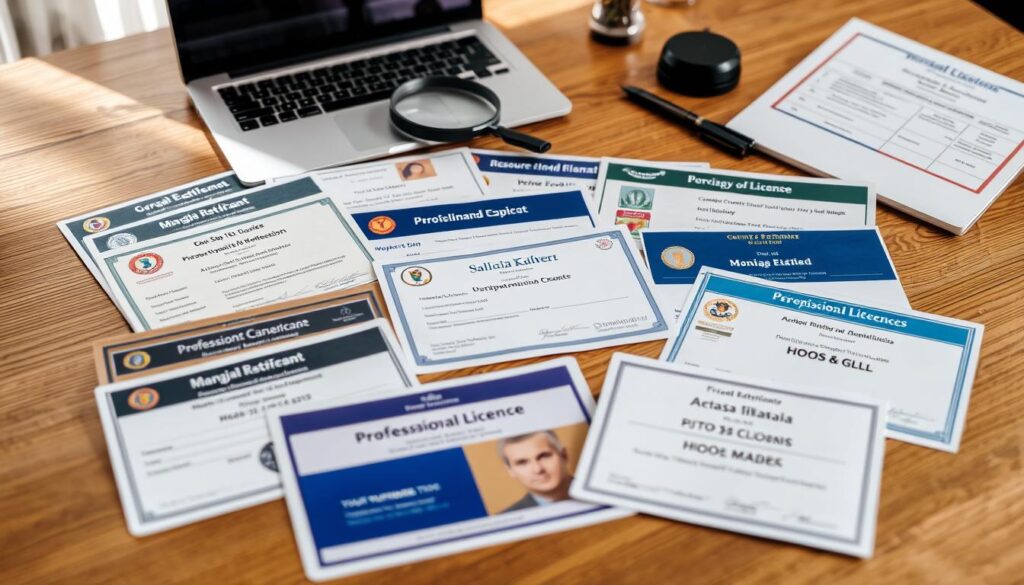
Dealing with state licensing for your home business can be tough. But it’s vital for legal operation and protection. Knowing your industry’s needs and keeping up with renewals lets you grow your business with confidence.
Insurance Needs for Home-Based Businesses
As a home-based business owner, it’s key to protect your business with the right insurance. With 14 million small businesses in the U.S. working from home, knowing about different insurance types is vital. They help keep your business safe.
Types of Business Insurance
For your home-based business, consider general liability, professional liability, and property insurance. General liability protects against injuries or damage. Professional liability covers mistakes in your services. Property insurance guards your equipment and inventory from theft, fire, or disasters.
Important Considerations for Home Insurance
It’s also important to check your homeowner’s insurance policy. Many policies limit business activities at home. Home-based business insurance starts at $13 a month. It can be customized to fit your business size and services.
Liability Insurance for Protection
Liability insurance is key for home-based businesses. It shields you from accident or injury costs on your property. Businesses like beauticians, tutors, and online stores need it. The right liability coverage protects your business from legal problems.
Getting the right insurance is smart for home-based entrepreneurs. Knowing about different insurance types helps protect your business. Review your options and choose the best policy for your home-based business.
| Insurance Type | Key Benefits | Average Monthly Cost |
|---|---|---|
| General Liability | Covers claims of bodily injury or property damage | $39 |
| Professional Liability | Protects against errors or omissions in your services | $59 |
| Property Insurance | Safeguards your business equipment and inventory | $42 |
Insureon, the leading online small business insurance marketplace, has helped secure over 1.5 million policies. They insure many home-based businesses, like IT consultants and painters.

“Insurance for home businesses can help protect against liability costs for injuries or accidents on residential property.”
Protecting Your Intellectual Property
Starting a home-based business means protecting your intellectual property (IP). This includes your business name, logo, creative works, and unique products. Understanding the different types of IP protection is key to keeping your ideas and innovations safe.
Trademarks for Your Business Name and Logo
A trademark identifies the source of a product or service. Registering your business name and logo as trademarks with the U.S. Patent and Trademark Office (USPTO) stops others from using similar branding. This registration gives you legal rights nationwide and strengthens your brand.
Copyrights for Creative Works
Creative works like website content and product designs get copyright protection automatically. But, registering your copyrights with the U.S. Copyright Office offers more benefits. It lets you sue infringers and could lead to higher damages. The registration process is easy and affordable, making it a smart move for home-based businesses.
Patents for Inventions and Unique Products
If your business creates new products or technologies, consider patent protection. Patents give you exclusive rights to your invention, stopping others from making or selling it without permission. The patent application process is complex, so getting help from a patent attorney is wise.
Knowing the differences between trademarks, copyrights, and patents helps you protect your IP. Protecting your intellectual property is vital for home-based businesses. It keeps your competitive edge and preserves the value of your creative work and innovative products.

| IP Protection | Duration | Key Features | Application Process |
|---|---|---|---|
| Trademark | As long as used and defended | Protects business name, logo, and brand identity | File application with USPTO, $275+ per class |
| Copyright | Life of author + 70 years | Protects original creative works like website content, marketing materials, and product designs | Register with U.S. Copyright Office, $55 standard fee |
| Patent | 20 years from filing date | Protects inventions and unique products | File application with USPTO, $300-$660 in fees |
Creating Contracts and Legal Agreements
Starting a home-based business means protecting your interests and setting clear expectations. Written contracts and legal agreements are key to this. They help you avoid misunderstandings and risks.
Importance of Written Contracts
Contracts are legally binding documents that outline terms and responsibilities. They prevent misunderstandings and ensure successful business transactions. A well-drafted contract protects your business and avoids disputes.
Common Types of Contracts for Home Businesses
- Service Agreements: Outline the services you’ll provide, the timeline, and the payment terms.
- Non-Disclosure Agreements (NDAs): Protect your confidential information and trade secrets.
- Employment Contracts: Clearly define the roles, responsibilities, and compensation for employees or independent contractors.
- Supplier Agreements: Establish the terms for purchasing goods or services from vendors.
- Lease Agreements: If you’re renting a space for your home-based business, a lease agreement is essential.
Tips for Drafting Effective Agreements
Creating business contracts and legal agreements needs clarity and specificity. Here are some tips:
- Consult a legal professional: For complex agreements or if you’re unsure about the legalities, it’s wise to work with an attorney who specializes in business law.
- Use plain language: Avoid jargon and legalese to make the agreement easily understandable for all parties involved.
- Clearly define the scope and terms: Outline the specific services, deliverables, timelines, and payment details.
- Address possible issues: Include provisions for dispute resolution, termination, and liability to protect your business.
- Review and update regularly: Revisit your agreements periodically to ensure they reflect your current business practices and legal requirements.
Investing time and effort into creating solid business contracts and legal agreements is essential. It helps establish a strong foundation for your home-based business. This is a key step towards long-term success.
| Business Structure | Key Considerations | Legal Requirements |
|---|---|---|
| Sole Proprietorship | Owned by one person, full responsibility for taxes and liability | Obtain necessary licenses and permits, register business name if operating under a different name |
| Partnership | Shared ownership, liability, workload, and profits among partners | Draft a partnership agreement, obtain necessary licenses and permits |
| Limited Liability Company (LLC) | Protects personal assets from most liabilities, flexible structure | File articles of organization, draft an operating agreement, obtain necessary licenses and permits |
| Corporation | Provides the most personal protection from liability, more complex structure | File articles of incorporation, obtain necessary licenses and permits, comply with corporate formalities |
“Properly drafted contracts are the foundation of a successful business. They protect your interests, set clear expectations, and prevent possible disputes.”
Understanding Employment Laws
Starting a home-based business means you must understand employment laws. You need to know how to classify workers and follow federal and state rules. Knowing your legal duties as an employer is key.
Hiring Employees vs. Independent Contractors
Deciding whether to hire employees or use independent contractors is a big choice. The choice affects labor laws, taxes, and benefits. Getting it wrong can cost a lot, so think carefully about the work and control you have.
Employee Rights and Protections
Every business must protect employee rights and well-being. This includes following Equal Employment Opportunity (EEO) laws, Americans with Disabilities Act (ADA), and Fair Labor Standards Act (FLSA). Knowing these laws helps create a fair workplace.
Essential HR Compliance for Small Businesses
As your business grows, you’ll need to follow important HR practices. This includes keeping records, having anti-discrimination policies, and meeting employee benefits rules. Getting legal advice can help a lot with these complex issues.
“Navigating employment laws is key for your home-based business’s success. Getting classification, compliance, and HR practices right can prevent big legal problems later.”
Understanding employee classification, labor laws, and HR compliance is vital for a successful home-based business. Stay updated, ask for help when needed, and always put your employees first.
Marketing Your Home-Based Business Legally
As a home-based business owner, it’s key to know and follow legal rules for marketing. This includes truth in advertising laws and data privacy. We’ll look at how to market your business legally.
Truth in Advertising Laws
Truth in advertising laws are a big deal for home-based businesses. They stop you from making false claims in ads. Make sure your ads are honest and don’t promise more than you can deliver.
Privacy Regulations for Customer Data
Data privacy is a big issue today. You must follow laws like GDPR and CCPA when handling customer data. Keep customer info safe and tell them how you use it.
Email Marketing Compliance (CAN-SPAM Act)
If you send emails to promote your business, you must follow the CAN-SPAM Act. This law requires you to let people opt out and to clearly mark ads. Breaking this law can lead to big fines.
It’s important for home-based business owners to keep up with advertising regulations, data privacy laws, and email marketing rules. Following these laws helps you build trust and avoid legal trouble. It’s a way to promote your business responsibly.
“Compliance with the law is the bare minimum for any home-based business. Going above and beyond to protect your customers and build trust should be a top priority.”
Resources and Support for Home-Based Entrepreneurs
As a home-based entrepreneur, you have many resources and support networks. They help you understand laws, grow your business, and meet others like you. Using these tools and communities is key to your success.
Government Resources and Websites
The Small Business Administration (SBA) is a great place to start. Their website has lots of info on laws and how to start and grow your business. You can also find help with money, contracts, and legal stuff for your industry.
Networking Opportunities and Groups
Joining groups online and in your area is a smart move. It lets you meet other entrepreneurs, share tips, and find new chances. Groups like the National Association for the Self-Employed (NASE) and local chambers have events and support to help you grow.
Local Small Business Development Centers
Small Business Development Centers (SBDCs) offer free help for home-based entrepreneurs. They provide counseling, training, and mentorship. These centers, linked to schools, help with research, planning, money, and legal stuff. Use their expertise to make your business succeed.

Leave a Reply