

In recent years, a growing trend has emerged where fathers are taking on the primary caregiver role, challenging traditional gender norms. This shift in parenting responsibilities has not come without its own set of challenges. Negative stereotypes surrounding stay-at-home dads, such as assumptions of lack of ambition, less masculinity, and ineptitude in childcare, persist in our society.
These stereotypes are rooted in deeply ingrained gender roles and societal norms that emphasize men as the primary breadwinners and women as the nurturing caregivers. Lack of support, peer pressure, fear of judgment, and inflexible workplace policies all contribute to the difficulties faced by work-at-home fathers.
Despite these obstacles, more and more men are stepping up to take on a greater role in their children’s lives. In fact, stay-at-home dads now comprise 16% of at-home parents, up from 10% in 1989. This shift reflects a growing desire among men to be more involved in childcare and household responsibilities.
Key Takeaways
- There is a growing trend of fathers taking on primary caregiver roles, challenging traditional gender norms.
- Negative stereotypes about stay-at-home dads, such as lack of ambition and ineptitude in childcare, persist in society.
- Lack of support, peer pressure, and inflexible workplace policies contribute to the challenges faced by work-at-home fathers.
- More men are now taking on a greater role in their children’s lives, with stay-at-home dads comprising 16% of at-home parents.
- The shift in parenting roles reflects a growing desire among men to be more involved in childcare and household responsibilities.
Understanding Societal Stereotypes About Dads

In the past, TV shows and ads often made dads look bad at childcare. Shows like “Who’s the Boss?” made moms seem better at raising kids. Ads showed men as clumsy and unable to do household chores. These views don’t match today’s parenting reality.
Many think stay-at-home dads have it easy or do nothing all day. But, a study found a 27% increase in time spent with kids by male employees in a four-day workweek trial in the UK. This is more than the 13% increase for women. It shows dads are very involved in their kids’ lives.
The Historical Perspective on Fatherhood
Traditionally, dads were seen as just providers. But now, they’re more involved in parenting. The idea that moms know more about parenting is being questioned.
Current Trends in Parenting Roles
More dads are taking an active role in parenting. It’s important to recognize and support their efforts. Families are now sharing tasks based on what they can do best, not just gender.
Stay-at-home dads like Idris Omuya are becoming more common. Mr. Omuya stays home with his daughter because of his business. But, his community thinks he’s lazy or jobless for it.
“When I shared my experience, people in my community perceived me as lazy or jobless for being at home with my daughter. They question my decision to support my wife’s career and care for our child.”
Mr. Omuya is willing to support his wife’s career, even though she earns more. This shows how families are changing. It highlights the need for understanding and support in balancing work and family life.
The Benefits of Being a Work-at-Home Dad
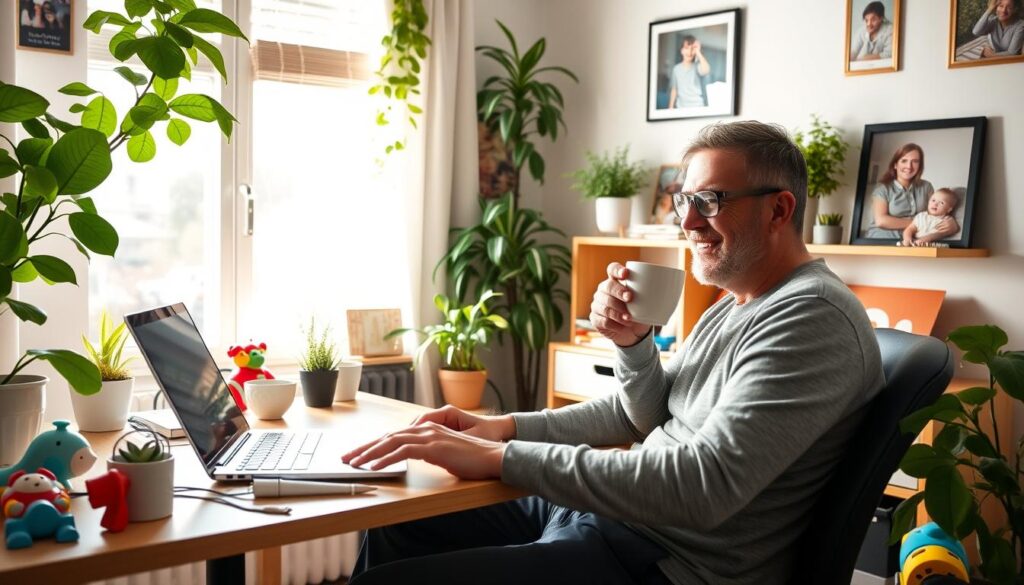
More men are choosing to be work-at-home dads, and it’s changing their lives. They find a great balance between work and family. This helps them bond with their kids in meaningful ways.
Improved Work-Life Balance
Being a work-at-home dad means you can mix work and family easily. No more long commutes or strict schedules. You can plan your day around your family’s needs.
This flexibility reduces stress and lets you be there for important moments. You can go to school events and join in on daily activities. It makes family life more rewarding.
Strengthened Family Bonds
Work-at-home dads get to spend more time with their kids. They can go on adventures together, like swimming or nature walks. This quality time strengthens their bond and creates lasting memories.
It’s a chance to be emotionally close and appreciate the joys of parenting. These experiences bring families closer together.
Enhanced Personal Growth
Being a work-at-home dad also helps dads grow personally. They learn to be more empathetic, patient, and solve problems better. These skills benefit their family and make them better professionals.
“Being a work-at-home dad has allowed me to be the primary caregiver for my children, which has been incredibly rewarding. I’ve been able to create lasting memories and strengthen my bond with my family in ways I never imagined possible.” – Alex Russell, Arcadis
Common Challenges Work-at-Home Dads Face

More fathers are choosing to be stay-at-home parents, facing unique challenges. They struggle with work-life balance and self-confidence. They must deal with gender bias and misunderstandings from others.
Navigating Gender Bias in the Workplace
Old workplace cultures can make it hard for men to be primary caregivers. The “fatherhood forfeit” means less support and suspicion when dads ask for time off. Working mothers also face biases, seen as less committed or competent.
Confronting Misunderstanding from Peers
Work-at-home dads often feel isolated and judged by others. The stigma of being a stay-at-home dad is tough, made worse by lack of family-friendly policies. This leads to loneliness and a lack of support from peers.
Balancing Family and Professional Responsibilities
Work-at-home dads struggle to balance family and work. They face pressure to be the main breadwinner and manage childcare and household duties. Good communication with their spouse is key to managing these challenges.
| Challenge | Statistic |
|---|---|
| Perinatal depression in new dads | Approximately 10% |
| Negotiating flexible work arrangements | Challenging due to workplace expectations |
| Inadequate paternity leave policies | Negatively impact working dads |
| Pressure to be the primary financial provider | Burdensome for a significant percentage of working dads |
| Social isolation and loneliness | Common challenges for working dads |
Work-at-home dads can overcome challenges with support and determination. A strong support network is essential. It helps them find fulfillment in their roles.
Strategies for Overcoming Stereotypes
Breaking free from social stereotypes about modern fatherhood is key to redefining masculinity. Work-at-home dads can overcome misconceptions by being confident in their roles. They should also talk openly with family and friends.
Embracing Your Role Confidently
Work-at-home dads should be proud of their roles. They shouldn’t apologize or make excuses. By showing their value, they can lead and prove their worth to their families.
Communicating with Family and Friends
Talking openly with loved ones can help break stereotypes. Work-at-home dads can share their stories and explain their choices. This helps clear up misunderstandings and builds support.
Building a Support Network
Connecting with other work-at-home dads is important. They can find support in local groups or online communities. Sharing experiences and successes helps make modern fatherhood more normal.
“Recognizing and challenging stereotypes is key to a more inclusive workplace.”
Leveraging Technology for Work Efficiency

As a work-at-home dad, using technology can really boost your productivity and balance between work and family. There are many tools and ways to set up your home office. The right tech can make your work easier and let you spend more time with your family.
Productivity Tools for Work-at-Home Dads
There are many apps and software made for remote workers, like work-at-home dads. They help you stay organized, focused, and on track with your tasks. Here are some top picks:
- Time-tracking apps like Toggl or Harvest to monitor your work hours and identify areas for improvement
- Project management tools such as Trello or Asana to keep your various projects and deadlines organized
- Collaboration platforms like Slack or Microsoft Teams to seamlessly communicate with colleagues and clients
- Task-management apps like Todoist or Remember the Milk to prioritize and manage your daily to-do’s
Setting Up an Effective Home Office
Having a dedicated, distraction-free space at home is key for staying productive while working remotely. Here are some tips to help you set up a great home office:
- Choose a specific room or area for your home office, away from busy spots
- Get a comfy, ergonomic desk, chair, and other office gear
- Make sure your workspace gets plenty of natural light and is tidy to stay calm and focused
- Set clear work hours and tell your family so they know when you’re working
With the right tech and a well-set-up home office, you can make the most of being a work-at-home dad. This way, you can do well at work and enjoy time with your family.
Sharing Success Stories: Inspiring Examples
Modern fatherhood is changing, and more stay-at-home dads are stepping up. They’re sharing their stories, inspiring others, and challenging old ideas. These dads are showing that being a work-at-home father is empowering and rewarding.
Profiles of Successful Work-at-Home Dads
Alex Russell, a dad of two from Arcadis, loves being a work-at-home dad. He talks about how important it is to have a supportive work culture. This lets him spend quality time with his kids while doing his job.
“I get to take my son swimming every week and go on nature walks,” he says. “It’s incredibly rewarding.”
Phong Vuong, a father of several, was the primary caregiver for seven years. His wife worked while he took care of the kids. “It was the best decision we ever made,” he says. “I wouldn’t trade this time with my family for anything.”
Testimonials and Positive Experiences
An 80-year-old man recently showed support for a stay-at-home dad. His comment, “Wow, that must be very rewarding,” shows how attitudes are changing. People are starting to see the value in work-at-home fathers.
Stephen Smith, a father of two, is proud to be an equal and supportive parent. He wants his daughters to know they can achieve anything, no matter their gender. “I want my girls to grow up knowing they can achieve anything they set their minds to,” he says.
These stories show the big impact work-at-home fathers have on their families and society. By sharing their experiences, they’re helping create a more inclusive and fair world. They’re showing that all parents, regardless of their role, are important and valued.
Advocating for Gender Equality in Parenting
As fatherhood changes, we must push for gender equality in parenting. We need to break down old stereotypes and give everyone equal chances. This makes parenting better for everyone, no matter their gender.
Public talks and media are key in changing how we see things. They help make being a stay-at-home dad normal.
Engaging in Public Conversations
Starting to talk openly about gender equality in parenting is important. People like Sarah Maconachie share how being an active dad helps their daughters grow strong. They fight against old ideas and support dads who stay home.
Promoting Equal Parenting Policies
We also need to fight for equal parenting rules at work and in society. We should push for things like parental leave and flexible work. This helps dads be seen as important caregivers.
Mark Morris says having male supporters is key. They can help make big changes and create a fair place for all parents.
Changing parenting for the better needs many steps. We must tackle gender roles, work-life balance, and what it means to be a man. By doing this, we make parenting better for everyone. This helps families and society too.
“Fathers are encouraged to prioritize spending time with their children to positively impact their growth and development.”
The Role of Community Support
Work-at-home dads face many challenges in modern fatherhood. A strong support network can make a big difference. Local groups and online communities offer a place to connect, share, and find encouragement.
Finding Local Parent Groups
Local parent groups can be a game-changer for work-at-home dads. They offer a chance to build relationships and learn from others. One dad felt isolated at first but became friends with other parents and even started performing for kids.
Creating inclusive spaces is key. It helps all parents feel welcome, no matter their gender. This fosters a sense of belonging.
Utilizing Online Communities
Online communities are also vital for work-at-home dads. Forums, social media groups, and websites provide a virtual support network. They help dads connect, share, and seek advice.
These spaces help dads overcome isolation. They offer a wealth of information and support tailored to their unique challenges.
| Key Statistics | Insights |
|---|---|
|
|
“Many parenting support groups remain mom-focused or mom-exclusive despite the rising number of at-home dads. The mommy-and-me temple playgroup changed its name to Baby and Toddler Time after a full-time father didn’t feel welcome.”
The role of fathers is evolving in modern society. The need for inclusive communities for work-at-home dads is growing. By using local and online resources, these dads can find camaraderie, advice, and empowerment.
Future Trends in Work-at-Home Parenting
The way work and family life balance is changing, and so is the role of dads in parenting. A study by the Boston College Center for Work & shows a big change. Over 96% of dads want to share childcare equally with their partners. But, only about 33% can do it well.
The COVID-19 pandemic has made remote work more common. This has helped parents balance work and family better. Now, there are 141,000 stay-at-home dads, up from 33% before the pandemic. This shows a big change in who takes care of kids.
Experts say we’ll see more family-friendly work policies soon. There will be more acceptance of different parenting setups. And, society’s view of dads’ roles will change too.
As dads take on more caregiving, fighting old biases will be key. By celebrating their role in modern fatherhood, we can make work and parenting fairer for everyone.

Leave a Reply